The TerraResponse Network team has completed the first stage of the preliminary investigation of the petroleum-contaminated area in Kharkiv’s Nemyslianskyi district. The purpose of the investigation is to define the boundaries of the sites where pilot remediation will be carried out.
Field investigation and laboratory analysis
During the fieldwork, 14 boreholes were drilled to depths of up to 5 metres, and 24 soil samples were collected.
The laboratory of the Ukrainian Scientific Research Institute of Ecological Problems (USRIEP) is conducting chemical analyses of the samples to determine their petroleum hydrocarbon content. The physical properties of the soils are being determined by the laboratory of the Ukrainian State Research and Production Institute for Engineering, Technical and Environmental Surveys (UkrSRITES).
The programme for the second stage of the investigation will be adjusted based on the laboratory results.
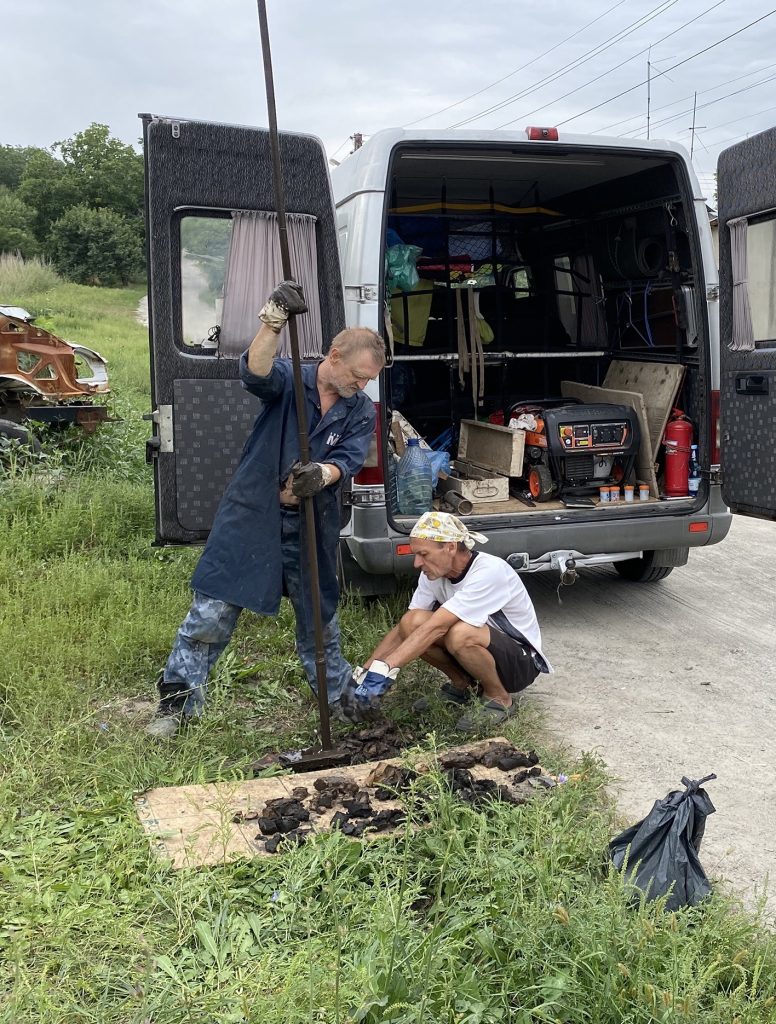
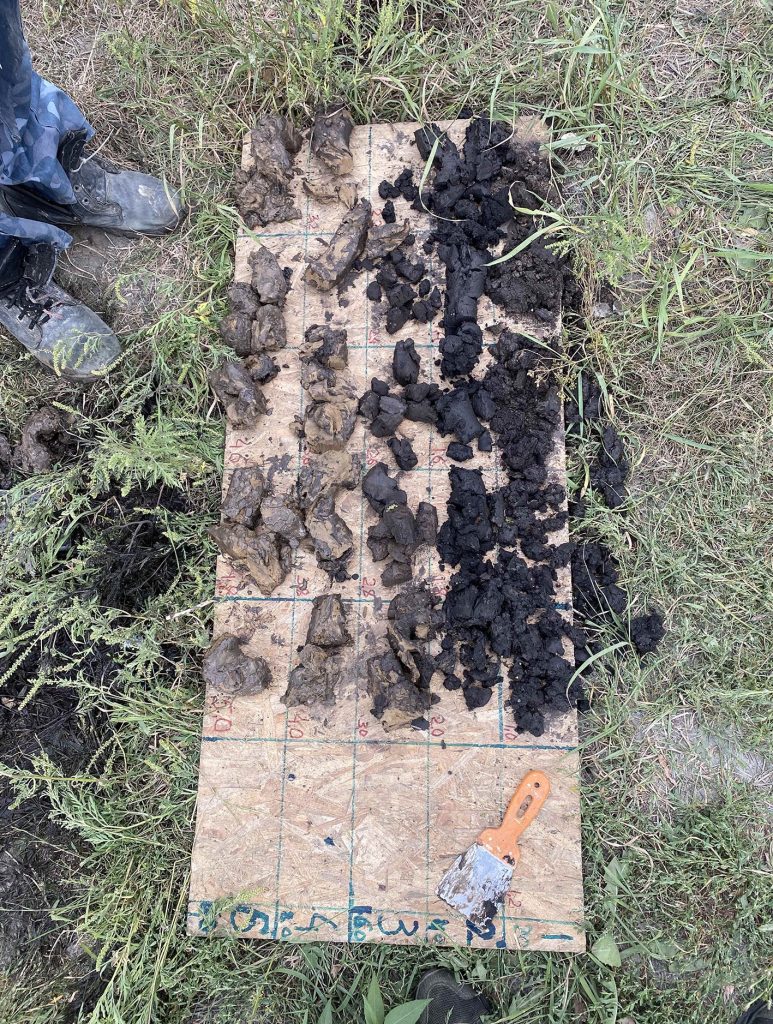
The pilot project will be conducted where people live every day
The field observations already support a preliminary conclusion: within the densely built-up urban area, the contamination is fragmented. Petroleum products did not form continuous contamination in the soils beneath the roads along which they flowed during the accident. Instead, they accumulated on open land within private households, forming separate localised contamination hotspots.
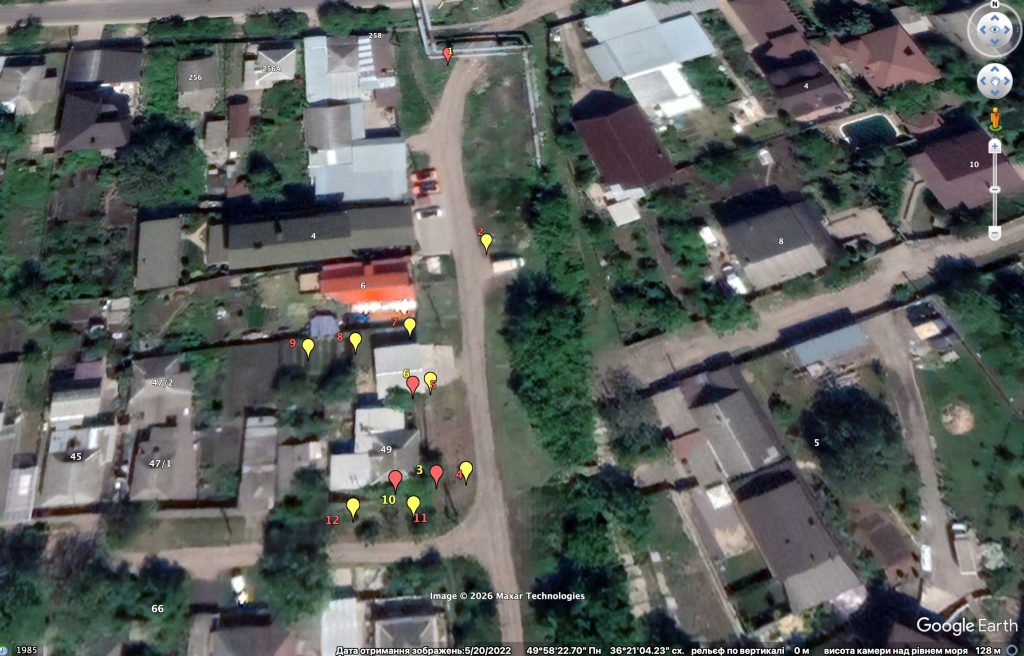
In view of these findings, we have revised the pilot project concept. Remediation is now planned directly within private household properties — under real conditions of dense urban development, next to residential buildings, gardens and wells.
This approach will allow us to evaluate the effectiveness of the technology precisely where people face the consequences of contamination in their everyday lives.
The project is implemented as part of “ResilientRoots – Strengthening Grassroots Environmental Leadership in War-Affected Ukraine,” with support from Austausch e.V., GreenRoots Hub and Brot für die Welt.